


How Can Time Tracking Software Help Businesses Improve Employee Productivity and Manage Work Hours?
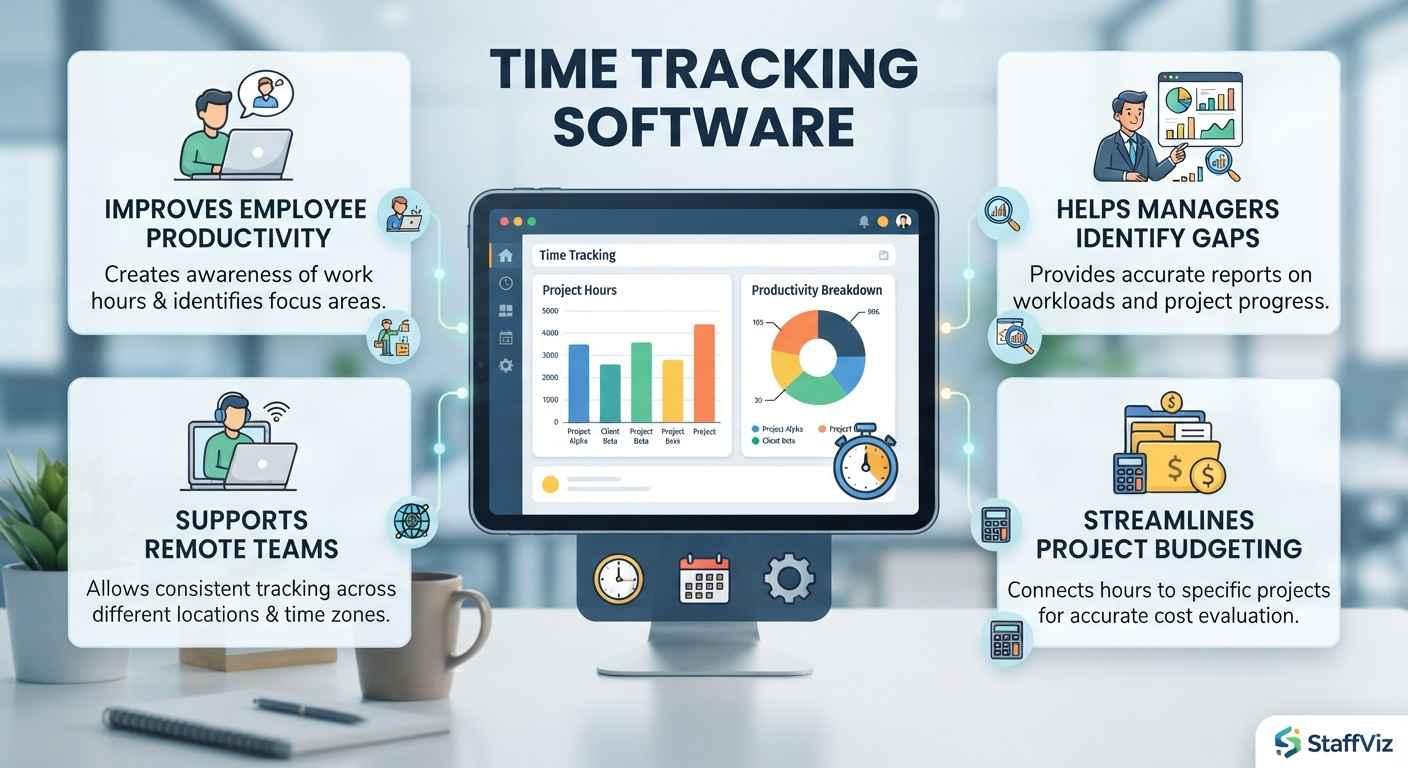
Managing employee working hours effectively is essential for businesses that want to improve productivity, control operational costs, and complete projects on time. However, when employees work across different locations, manage multiple assignments, or follow flexible schedules, keeping track of their time can become challenging. Manual timesheets and spreadsheets often create unnecessary administrative work and make it difficult for managers to understand how time is being spent.
This is where Time Tracking Software becomes valuable. It helps businesses record working hours, monitor tasks, organize project schedules, and understand employee productivity through accurate information. Instead of relying on guesswork, managers can use time tracking data to make better decisions, identify workflow problems, and distribute workloads more effectively. With the right solution, businesses can create a more organized working environment while helping employees make better use of their time.
Why Is Time Tracking Important for Modern Businesses?
Time management affects almost every aspect of business operations. When managers do not have a clear understanding of employee working hours, it becomes difficult to identify delays, calculate project costs, or determine whether workloads are balanced.
For example, a digital marketing agency may have employees working on several client campaigns simultaneously. Without proper tracking, managers might struggle to understand how much time each campaign requires. This can result in unrealistic deadlines, inefficient resource allocation, and missed project targets.
A structured tracking system provides better visibility into daily activities. Employees can record their working hours, while managers can review attendance, task progress, and timesheet information. This creates accountability without requiring constant manual supervision.
According to the U.S. Bureau of Labor Statistics American Time Use Survey, time use research provides valuable insights into how people distribute their time across different activities. Businesses can apply the same principle by understanding where working hours are being spent and identifying opportunities to improve efficiency.
How Time Tracking Software Improves Employee Productivity
1. Creates Better Awareness of Working Hours
Employees sometimes underestimate how much time they spend on meetings, administrative responsibilities, emails, and smaller tasks. Tracking working hours helps them understand their daily routines and recognize activities that consume more time than expected.
For instance, an employee who spends several hours switching between different assignments may discover that frequent interruptions are affecting their ability to complete important work. With better visibility, they can organize tasks more effectively and prioritize responsibilities.
Over time, this awareness encourages healthier work habits and more consistent performance.
2. Helps Managers Identify Productivity Gaps
Managers need reliable information to understand whether projects are progressing as expected. Time tracking reports can highlight activities that regularly take longer than planned, recurring delays, and uneven workloads.
Suppose a software development team estimates that a particular task will require five hours, but recorded working time consistently reaches eight hours. Managers can investigate whether the task is more complicated than expected, whether employees need additional training, or whether the original estimate was unrealistic.
These insights help businesses improve planning instead of placing unnecessary pressure on employees.
3. Reduces Manual Administrative Work
Preparing timesheets manually can take considerable time, especially for organizations with large teams. Employees may forget to enter their hours, while managers must spend additional time checking records and correcting mistakes.
Digital tracking simplifies this process by organizing work hour records in one place. Depending on the software, employees can record time through automatic timers, manual entries, or task based tracking.
This reduces repetitive administrative responsibilities and gives managers more time to focus on important business activities.
How Project Time Tracking Software Supports Better Workflows
Tracks Time Spent on Individual Projects
When employees handle multiple projects, understanding how much time each assignment requires is important for effective planning. Project Time Tracking Software allows teams to associate recorded hours with specific projects, clients, or tasks.
For example, a web development company may manage five client websites simultaneously. By reviewing project time records, managers can identify which assignments require additional resources and which are progressing efficiently. This information also helps businesses prepare more realistic project estimates and avoid unnecessary delays.
Improves Project Budgeting and Resource Allocation
Time records provide useful information about project expenses and employee workloads. Managers can compare estimated working hours with actual recorded time to understand whether a project is staying within its planned budget.
If one project consistently requires more hours than expected, the business can review its requirements, adjust deadlines, or assign additional employees. This approach supports better resource planning and helps prevent employees from becoming overwhelmed.
Research published in the Journal of Applied Psychology titled When Daily Planning Improves Employee Performance examines how daily planning, task prioritization, and scheduling relate to employee performance. It supports the importance of structured planning when organizing workplace responsibilities.
Benefits of Using Online Time Tracking Software
Provides Access to Work Hour Records
Modern teams often work from home, offices, and different geographical locations. Managing their schedules through spreadsheets or physical attendance registers can create communication problems.
Online Time Tracking Software makes it easier to maintain working hour records through a centralized digital platform. Authorized managers can review employee time entries, check attendance information, and access reports without depending on physical documents.
This is particularly useful for businesses managing remote employees or distributed teams because everyone can follow a consistent time recording process.
Supports Accurate Attendance and Timesheet Management
Accurate attendance information helps businesses maintain organized employee records. Digital tracking systems can simplify clock in and clock out activities while reducing mistakes associated with manual entries.
Employees can review their recorded hours, and managers can check timesheets before approving them. This creates a more transparent process for calculating working hours and preparing payroll information.
Helps Reduce Workplace Distractions
Understanding how employees spend their time can reveal patterns that affect concentration. Frequent interruptions, unnecessary meetings, and constant task switching can make it difficult to complete important assignments.
A study published in Applied Ergonomics, available through PubMed research on workplace interruptions, found that interruptions can increase task processing time and affect performance. Businesses can use time tracking insights to identify inefficient routines and encourage better scheduling practices.
However, time tracking should support employees rather than create pressure through excessive monitoring. Managers should use reports to improve workflows, set realistic expectations, and encourage a healthy balance between focused work and breaks.
What Features Should Businesses Look for in Time Tracking Software?
Choosing the right platform requires more than checking whether it can record working hours. Businesses should consider their team structure, project requirements, and reporting needs.
Automatic and Manual Time Tracking
A useful solution should offer convenient ways to record working hours. Automatic timers help employees track tasks as they work, while manual entries provide flexibility when time needs to be recorded afterward.
Detailed Reporting and Analytics
Reporting features help managers understand employee attendance, project hours, and working patterns. Clear reports make it easier to identify workload problems and evaluate project progress.
Project and Task Management
Businesses managing multiple assignments should look for task based tracking that connects recorded time with specific projects. This improves visibility and makes project planning more accurate.
Remote Team Accessibility
Cloud based access allows employees and managers to work with time records from different locations. Businesses should also consider ease of use, data security, and compatibility with their existing workflows.
How Can Businesses Implement Time Tracking Successfully?
Introducing a new tracking system requires clear communication and realistic expectations. Businesses should first identify why they need time tracking, whether for attendance management, project budgeting, payroll preparation, or productivity analysis.
Next, managers should explain how employees will use the platform and what information will be collected. Providing simple instructions and allowing employees to become familiar with the system can make adoption easier.
It is also important to review reports regularly instead of collecting information without using it. For example, managers can compare weekly project hours, identify repeated delays, and discuss practical improvements with their teams.
Most importantly, businesses should measure meaningful outcomes rather than simply expecting employees to spend more hours at their desks. Better productivity comes from effective planning, focused work, and achievable goals.
Conclusion
Managing employee schedules and improving workplace efficiency requires accurate information and a consistent approach to time management. Time Tracking Software helps businesses record working hours, organize project activities, simplify timesheets, and understand how employees use their working time.
Whether a company manages an office based workforce or a remote team, the right tracking solution can improve visibility and support better operational decisions. Combining accurate time records with effective planning also helps businesses reduce administrative work and manage resources more efficiently.
StaffViz offers businesses a practical way to explore modern productivity software for employee time management and workforce productivity. Visit StaffViz to discover how better time tracking can help your organization build more organized workflows and achieve its business goals.
Frequently Asked Questions (FAQs)
1. How does time tracking software improve employee productivity?
It helps employees understand how they spend their working hours, organize daily responsibilities, and identify activities that consume unnecessary time. Managers can also use reports to improve workload distribution.
2. What is the difference between project time tracking software and regular time tracking?
Regular time tracking focuses on recording working hours, while project time tracking connects those hours to specific assignments, clients, and projects. This helps businesses evaluate project costs and progress.
3. Is online time tracking software suitable for remote employees?
Yes. Online tracking allows remote employees to record working hours and manage tasks through a centralized platform. Managers can review timesheets and attendance records without requiring employees to work from a physical office.
4. Can time tracking software help businesses reduce operational costs?
Yes. It helps identify inefficient workflows, unnecessary administrative activities, and projects that consistently exceed estimated working hours. Businesses can use this information to improve resource allocation and control expenses.
5. What features should small businesses look for in time tracking software?
Small businesses should prioritize automatic timers, manual time entries, timesheet management, project tracking, attendance records, and reporting. An easy to use platform can also make employee adoption much simpler.
6. How does project time tracking help managers meet deadlines?
It provides visibility into the hours required for different assignments. Managers can identify delays, review employee workloads, and adjust project schedules before minor issues become major problems.
7. Is time tracking software useful for hybrid and remote teams?
Yes. It helps maintain consistent working hour records across office based and remote employees. Managers can review attendance and project information while employees maintain flexibility in their working arrangements.
 Portuguese (Brazil)
 English
 Arabic
 French
 Spanish
 Portuguese
 Deutsch
 Turkish
 Dutch
 Italiano
 Russian
 Romaian
 Greek